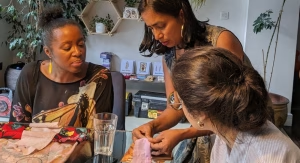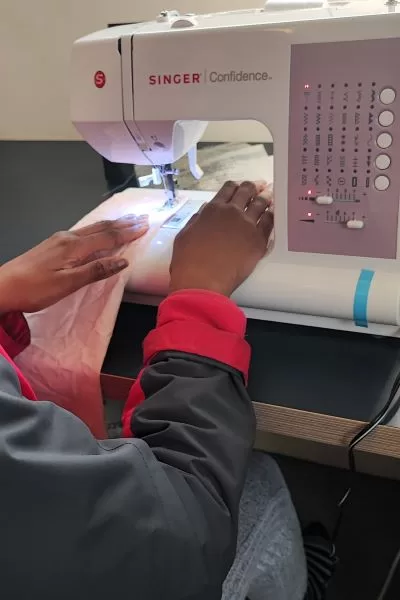
Mending clothes can feel overwhelming at first. But it’s a practical skill that saves money and helps the planet. If you found a hole in your favourite jumper or your child’s clothes have ripped at the knees, with a bit of time and sewing skills, you can repair the clothes.
Many people are turning to mending & patching as a way to keep their favourite items alive. Whether you are mending by hand or with the help of a machine, the threads for mending these items is the backbone.
But what kind of thread should you use, especially if you’re new to this? This guide draws from real stories and our personal experiences. It covers what threads to use and why it matters. If you’re new to sewing and mending, you’ll find straightforward advice here to make your repairs last.
Different types of mending
If you are wondering about the different types of mending and wondering which one to use for your particular issue, here’s our detailed article on this topic: 10 types of mending.
What kind of threads for mending do I need?
Picking the right thread depends on your project. There are 5 main considerations:
- Kind of finish you are looking for
- The type of fabric
- Purpose of the item
- Type of mend you are choosing
- Your previous knowledge & experience
Finished Look
The finished look you are going for is to help you decide the type of mend you are choosing. If you want the mend to blend in, then you are looking for invisible mending techniques. If you want to stand out, then you are going for patching with contrast fabric or visible mending styles.
The mending style you choose will help you decide on the type of mending thread, thickness of the thread and the thread colour.
Fabric type
All fabrics aren’t made equal and they all behave differently. Does your fabric stretch a lot? Is it strong and hardwearing like jeans or cotton canvas? Is it a specialty fabric like leather or suede? Is it sheer and/or slippery like organza? If you can’t tell, check the fabric label on the item you are repairing.
Your fabric type will help you decide on the thickness of the thread needed and also the material composition of the thread.
Purpose of the item
The type of mend you choose and the threads needed for mending will depend on how you use the item. You will use and therefor mend a leather sofa differently from a wedding dress. Questions to think about will be:
- Does the mend need to be waterproof?
- Is the inside of the garment accessible or are you trying mend the item from the outside?
- How much wear and tear will this item face?
Answers to the questions will help you decide on the type of meding thread and the thickness of the thread.
Type of Mending
The kind of mending you are going to choose will depend on the purpose of the item above. Questions to consider for this will be
- Are you planning to mend using a sewing machine or by hand?
- Is it going to be visible or are you attempting invisible mending?
- Are you going to be darning rather than mending?
The type of mend will help you decide on the type of thread you use, thickness of the thread, the colour of the chosen threads for the mend.
Previous experience and expertise
This is not about feeling bad about not having the skills. This question is all about understanding where you are in your mending journey. It’s about not biting more than you can chew. So, the questions to consider are:
- Do you have the experience to do this type of mend?
- Should you choose a simpler technique till you build up your skill?
- Can you use this mend as a practice for a more challenging technique?
Knowing how much you know and don’t know is a great way to plan your progress.
Different types of threads for mending
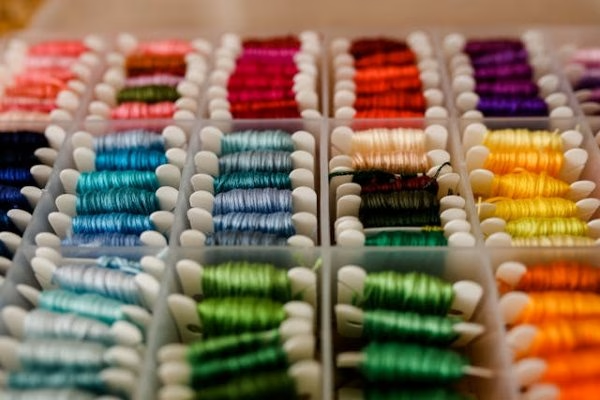
Picking the right thread is about more than colour. Threads come in many types and each works better for different jobs. Beginners often grab whatever is nearby, but using the best thread for your fabric helps the mend last.
The main types of threads for mending are:
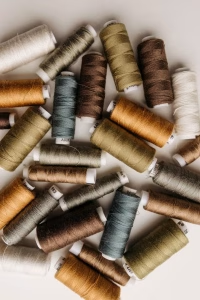
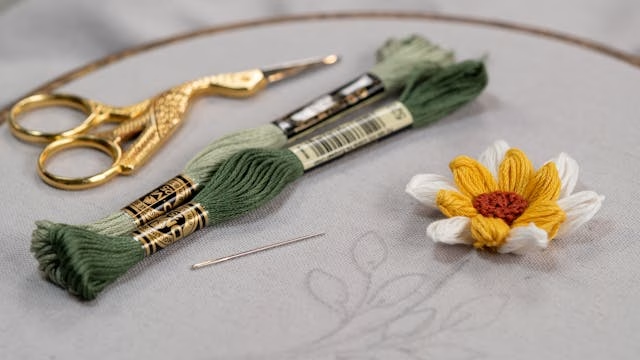
Embroidery floss
Gives bold, visible stitches. Fun for creative patches, but thicker than sewing thread. Works well on cotton, polyester and blended fabrics.
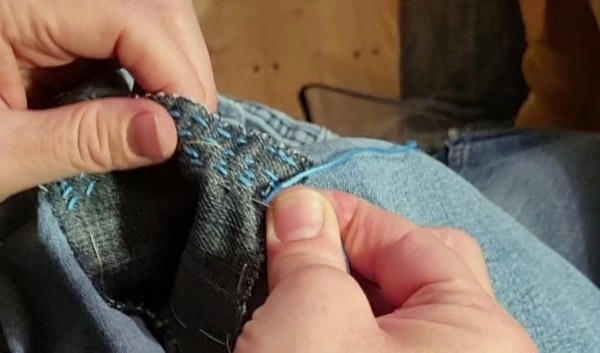
Sashiko thread
Popular for jeans and visible mending. Strong cotton thread with a matte finish. The go-to for many pros and hobbyists. Works well on cotton, jeans, courdroy, sweatshirt type fabrics. Due to the thickness of the thread, its not suitable for lightweight and sheer fabrics.
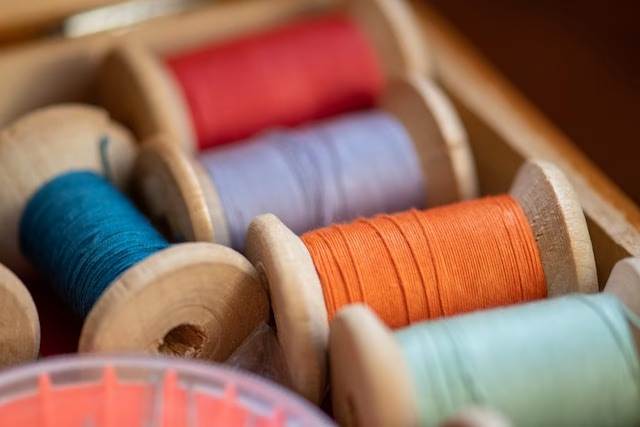
Darning cotton
Great for socks, shirts, or old pillowcases. Slightly thicker and tougher than regular thread. Comes in a range of colours to make your mend stand out visually.
Yarn
Great for thick knitted jumpers and hand knitted socks. Comes in a range of weights and a wide variety of colours. Natural woolen yarn add texture and warmth to repairs on sweaters.

Other notable mending threads
- Specialty Polyester thread: Very strong. Use it for tough fabrics, outdoor gear, and places that need to last. Maybe need to be waterproofed after the mending.
- Silk thread: Soft and blends in. Nice for delicate fabrics or subtle mends. Needs gentle handling. Suitable for sheer and lightweight fabrics.
- Elastic thread: Meant for stretchy clothes. Stretches with the fabric and bounces back. Use for leggings, swimwear, or sportswear. Needs gentle handling.
- Upholstery thread: Extra strong. Use it for areas with lots of wear or thick materials.
Types of Threads for Mending Matrix
| Thread Type | Best For | Do | Don’t | Key considerations |
|---|---|---|---|---|
| Sewing Thread | Everyday clothes | Match fibre | Use for heavy denim | Easily available Budget friendly |
| Embroidery Floss | Creative, visible fixes | Try colours | Use for invisible mends | Easily available Budget friendly |
| Sashiko Thread | Jeans, thick cotton | Use for durability | Use on fine fabrics | Available in specialty shops Expensive |
| Darning Cotton | Socks, shirts | Go for smoothness | Patch heavy jackets | Easily available Budget friendly |
| Yarn | Jumpers, Cardigans & Hand knitted socks | Match fibre and weight | Use for fine knits | Easily available Budget friendly |
| Specialty Polyester Thread | Workwear, outdoor gear | Strength | Use on heat-prone areas | Available in specialty shops Slightly more expensive |
| Silk Thread | Delicate items | Subtle repairs | Use on rough fabrics | Available in specialty shops Expensive |
| Elastic Thread | Stretchy clothes | Fix leggings, knits | Use on non-stretch | Available in specialty shops Expensive |
| Upholstery Thread | Heavy fabrics | Patch bags, jackets | Use for light clothes | Available in specialty shops Slightly more expensive |
General considerations
- Cotton threads are a solid choice for most beginners. They don’t slip like synthetics and breathe well. Use them on cotton clothes or linens.
- Polyester threads shine on synthetic fabrics. They stretch a little and won’t snap under strain. This is key for active wear or jeans. As polyester doesn’t shrink in the wash, it is great for clothes that will be machine washed.
- Yarn is great for knits. It fills in holes without puckering the fabric. Choose yarn that’s closest in weight to the item you are mending.
- Embroidery floss brings colour to the table. It’s not just for decoration. Use it to reinforce weak spots on bags or jackets. The threads come in packs so you can experiment without wasting money.
- Organic cotton or recycled threads are gaining popularity and are becoming more accessible. They cost a bit more but its perfect if you want to be more eco friendly.
- Shop in person when you can, so you find the right colour and feel how the thread behaves.
What mending thread should I choose as a beginner mender?
Thread is the backbone of any mend. The right one makes your work strong and neat. Let’s look at the main options for beginners.
- Cotton threads are gentle on natural fabrics. They come in different weights so you can pick what fits. Polyester threads hold up better on synthetic fibres.
- Start with basic cotton threads. They’re easy to find and handle simple jobs.
- Embroidery floss is a great choice for beginners who want to try visible mending. It’s thicker, readily available and comes in all colours of the rainbow. This makes it ideal for creative fixes.
What’s next?
Next time you spot a hole, don’t toss your clothes. Grab a needle, pick out the right thread, and patch it up. It’s easy to start and your clothes feel more personal when you mend them yourself. Tag your repairs and share them on social media—you’ll inspire others to try mending too.
If you want to learn to mend, remember we run mending classes here at isifiso
If you have any questions about threads for mending or mending in general, drop it in the comments below.